Why is your website not "valuable"? An in-depth reflection after a programmer was rejected by Google AdSense.
When I saw the rejection email from Google AdSense, I stared at the overseas tool site that I had spent three weekends building and seriously thought for the first time: what is the purpose of building an independent website?

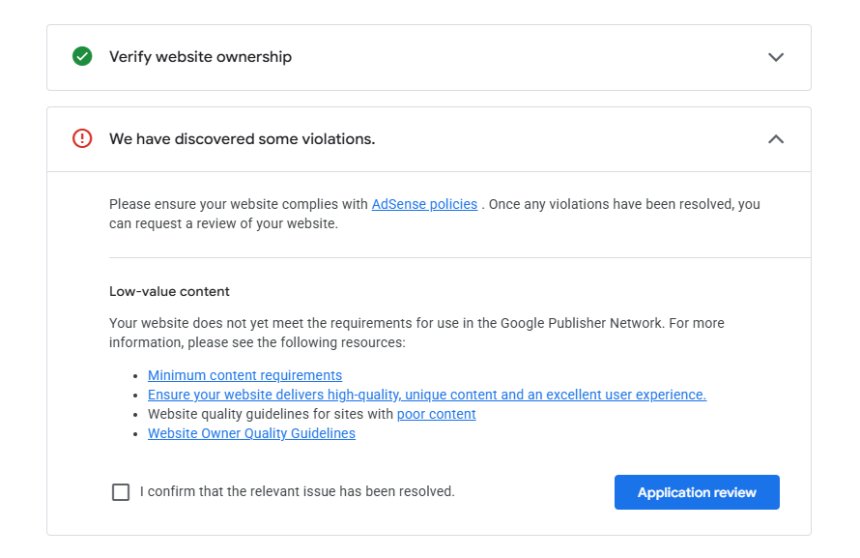
When I saw the rejection email from Google AdSense, I stared at the overseas tool site that I had spent three weekends building and seriously thought for the first time: what is the purpose of building an independent website?
Is it for a product designed to create self-indulgent entertainment, or to create real commercial value?
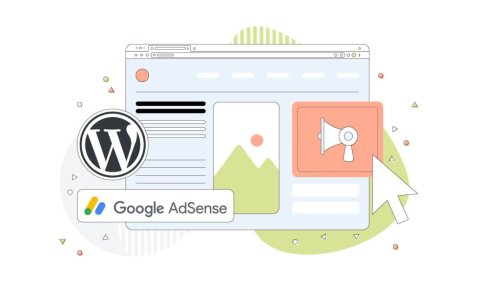
(Google AdSense is an advertising service launched by Google that allows website or blog publishers to earn revenue by displaying ads automatically matched by Google in their content.)
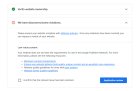
As a programmer whose main job is still working at a large company and who's also exploring overseas markets as a side hustle, my first independent product—an AI tool navigation site for developers—was promptly rejected when I applied for Google AdSense. The reason was standard: "Your website is not ready to display ads."
This week, I watched a live stream about Google AdSense. After more than an hour, I realized how naive I had been: I had been using an engineer's mindset to develop products, but I was thinking about commercialization with a primary school student's mindset.
Today, I'm sharing with you the core insights from this five-figure livestream, combined with my real-life experiences and pitfalls, without reservation. This isn't just a guide to AdSense; it's also a reflection on how a tech professional should approach the craft of "making money."
I. The harsh truth: Traffic ≠ Value; where your users come from determines how much you can earn.
I used to naively believe that as long as a website has traffic, it can make money by displaying ads.
The first data chart from the live stream shattered this illusion: a search user from the United States clicking on an ad could be worth more than five times that of a Brazilian user.
The core gap is here:
- The average CPC (cost per click) in the United States is approximately $0.61.
- Germany/UK: $0.35-$0.45
- Brazil/India: $0.10-$0.15
What does this mean? If your website traffic mainly comes from social media sharing (like the popularity of the programmer community in India), even with thousands of visits per day, your advertising revenue may not be as high as a few hundred visits per day from Google searches in the United States.
My first mistake: My tool site's traffic mainly came from two sources: 1) organic traffic and 2) promotion from domestic social media. Google considers this traffic to have very low value.
The solution provided in the live stream (which is also the direction I'm currently adjusting):
1. Prioritize creating content that search engines can understand: Don't just create tools; write in-depth usage tutorials, scenario solutions, and comparative evaluations around the tools. This is the kind of "answers" Google likes.
2. Focus on the business intent behind keywords: The business value behind a user searching for "best free AI coding tools" is completely different from that behind a user searching for "how to implement authentication in Next.js".
The former may simply be someone looking for free tools, while the latter may be a decision-maker on a development team who needs a solution.
3. Tool websites must have content: Pure tool websites are difficult to pass review and also struggle to acquire high-value traffic. Content is essential to demonstrate the value of the tools and establish professional authority.
II. Improve website quality: at least make it look presentable.
1. First, check if the website is fully functional, including privacy policy, terms of service, about us, etc., so that the website looks like a legitimate website.
2. To build multiple internal pages, you can expand your website content through different functional modules, blogging, and multilingual websites.
3. Technical optimization: Google prioritizes indexing mobile devices, ensuring your pages are mobile-friendly and load smoothly.
Of course, you can also use AI for analysis. AI can analyze the shortcomings of your current website and provide specific optimization suggestions.
(For example, I use Claude to analyze the shortcomings of my website)
III. The most crucial decision: Is your website truly suitable for AdSense?
This was the part of the live stream that shocked me the most. I used to assume that the ultimate goal of all websites was to run AdSense.
But the lecturer asked two questions that stunned me:
1. "If your tool site incurs costs for calling APIs, can AdSense's revenue cover those costs?"
I did the math: my navigation site uses an AI model API, and it's billed on a pay-as-you-go basis. If there are 1000 users per day, the API cost is about $5-10. With AdSense, the same traffic might only cost $1-3 per day in the early stages. I'm essentially using my side hustle to do charity.
2. "Why must everyone squeeze onto the AdSense narrow bridge? Is the barrier to entry for the paid model really that high?"
He shared some data: for utility products, if even one in a thousand users are willing to pay, the revenue can often exceed AdSense's revenue per 10,000 impressions. More importantly, paying users provide you with continuous income and genuine feedback, while advertising users come and go.
My moment of epiphany:
I've been avoiding the most fundamental question—what problem does my product actually solve for whom it's worth paying for? I'm obsessed with technical implementation, using "accumulating users with free services first" to numb myself, but I dare not face the soul-searching question of "whether anyone truly needs it."
The live stream provides a clear path:
- Websites suitable for AdSense include: content-based media (blogs, news sites), entertainment websites (games, jokes), and tool sites that already have stable, high-value search traffic.
- Prioritize paid websites: tools that address specific workflow pain points, tools with clearly defined APIs or server costs, and products geared towards business users (B2B).
- Hybrid model: Basic functions are free with ads, advanced functions are paid and ad-free. This is the path taken by many successful tool websites.
IV. Reapply: This time I was smarter.
Based on the above understanding, I completely adjusted my website and application strategy:
1. Content Restructuring: From "Function Display" to "Problem Solving"
- Instead of simply listing tools, I write "practical scenario guides" for each tool. For example, I don't just introduce Cursor, but write "Cursor usage guide with practical examples".
- I started creating original tutorials that have long-term search value. This is the core of Google's judgment of "quality".
2. Traffic strategy adjustment: Temporarily abandon social media traffic generation and focus on SEO.
- I stopped promoting in unrelated communities to avoid generating low-value traffic that could interfere with Google's judgment.
- I optimized the page for several keywords with moderate competition but clear commercial intent (such as "AI coding tools for startup").
3. User experience is paramount: First, make the site look like a "proper website".
- The "About Us", "Privacy Policy", and "Terms of Use" have been improved (generated using AI and manually adjusted).
- Ensure the website runs smoothly and looks good on both mobile and desktop.
- All low-quality, opportunistic ad placements have been completely removed.
4. A shift in mindset: from "making a little money" to "building assets".
I realized that passing the AdSense audit is not the end. It's just a beginning, a signal that your website has the ability to provide sustainable value. The real goal should be to make your website a digital asset that can continuously attract high-quality users and flexibly choose its business model (advertising or paid).
Five heartfelt suggestions for newcomers to overseas markets who also want to apply for AdSense.
1. Ask "why" first, then "how": What do you want to achieve with the website? If it's about validating ideas and getting quick feedback, a paid model might be more efficient than waiting for AdSense.
If your goal is to build a long-term brand and passive traffic, then polish your content like you polish a product.
2. Content is your first line of defense: For tech professionals, the most valuable content to create is "in-depth pitfall experiences" and "scenario-based solutions".
This is what Google likes, and what our peers truly need. Stop being simple information carriers.
3. Think about commercialization during the design phase: Don't wait until all the technology is implemented before thinking about how to make money.
When designing the information architecture, plan where to naturally embed advertising space and where to guide users to paid features. Technical implementation should serve the business logic.
4. Be data-driven, not intuition-driven: Applying for AdSense is itself an A/B test. If rejected, carefully analyze the reasons for rejection (even if they are vague) and adjust accordingly.
Once launched, use data to determine which ad placements and content are truly profitable, not what you might assume.
5. Be patient and keep creating: Google's review process can take 20 days or longer. Use this time to keep creating valuable content instead of just waiting.
Every time you optimize your code or update your tutorials, you are increasing the actual value of your website and the probability of it being approved.
The fairest thing about the internet is that true value will eventually be discovered.
Share
What's Your Reaction?
 Like
0
Like
0
 Dislike
0
Dislike
0
 Love
0
Love
0
 Funny
0
Funny
0
 Angry
0
Angry
0
 Sad
0
Sad
0
 Wow
0
Wow
0