

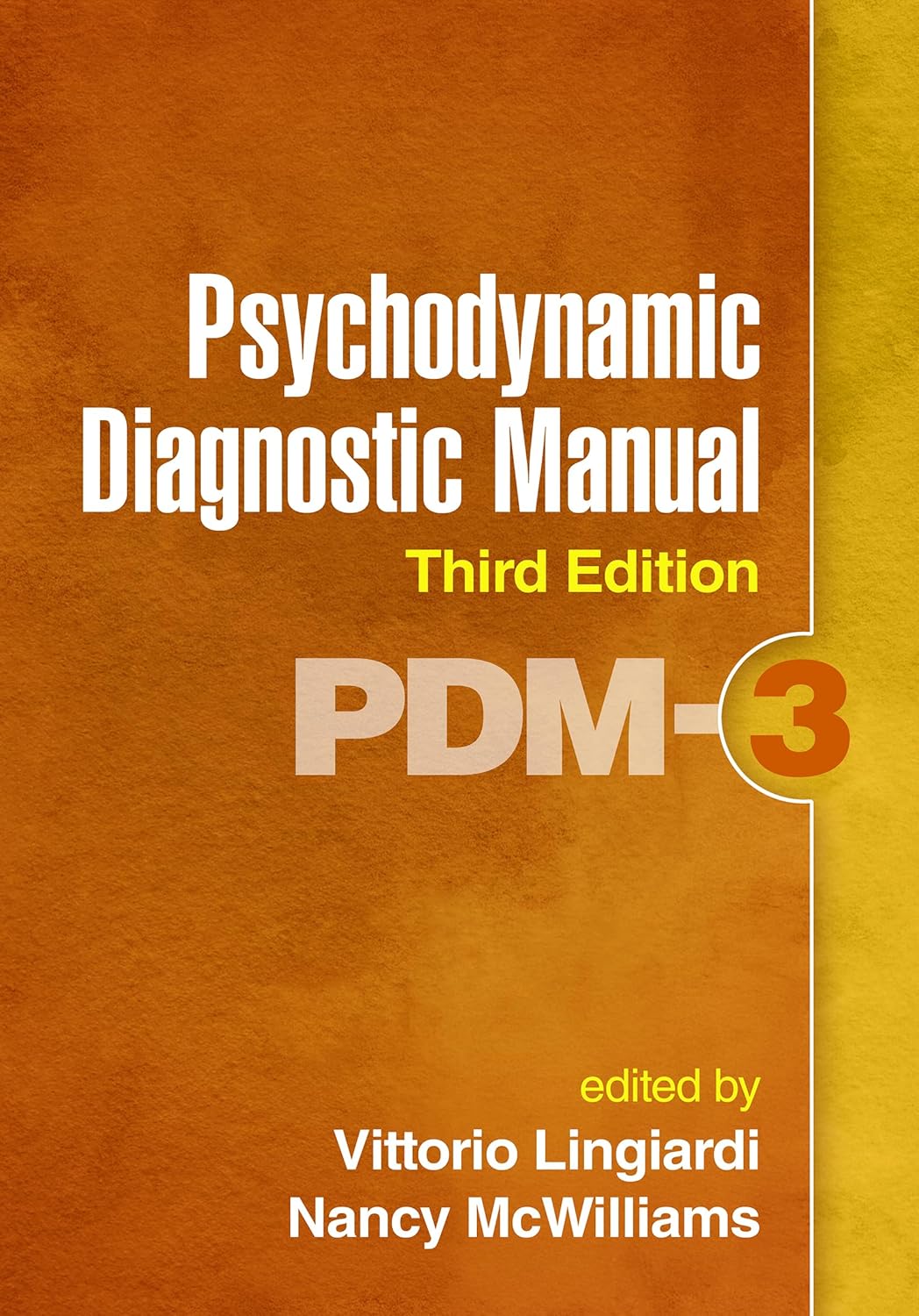
Fully updated and restructured with 70% new material, PDM-3 presents important advances in multiaxial mental health diagnosis from a psychodynamic perspective, in dialogue with neuroscientific and cognitive-behavioral perspectives. Used worldwide, this authoritative manual offers an empirically based, clinically useful alternative or supplement to DSM and ICD descriptive and symptom-oriented diagnoses. PDM-3 guides the practitioner to develop a multilayered dimensional understanding of each patient, leading to a rich case formulation and flexible treatment plan. Leading international experts systematically address personality functioning, mental capacities, and symptomatic impairment in infancy, childhood, adolescence, adulthood, and old age, including jargon-free descriptions and clinical examples. The companion website provides additional, in depth case illustrations and five downloadable and reproducible PDM-derived rating scales.
New to This Edition Restructured to follow development chronologically. Conceptual refinements, updated assessment tools, and expanded case material. Chapters on the transition from infancy to childhood and from adolescence to adulthood. Chapters on psychological experiences throughout the lifespan that are not captured by a diagnosis, but may require clinical attention.
Supporting associations include the International Psychoanalytical Association, Division 39 of the American Psychological Association, the American Psychoanalytic Association, the International Association for Relational Psychoanalysis & Psychotherapy, the American Association for Psychoanalysis in Clinical Social Work, and other organizations.
PDM-2 won the American Board and Academy of Psychoanalysis Book Prize (Clinical Category)
Publisher : The Guilford Press
Publication date : January 6, 2026
Edition : Third
Language : English
Print length : 1058 pages
ISBN-10 : 1462558712
ISBN-13 : 978-1462558711
Item Weight : 4.14 pounds
Dimensions : 7 x 1.8 x 10 inches
Best Sellers Rank: #79,273 in Books (See Top 100 in Books) #46 in Medical Psychoanalysis #73 in Popular Psychology Psychoanalysis #76 in Social Work (Books)
Customer Reviews: 4.4 4.4 out of 5 stars (4) var dpAcrHasRegisteredArcLinkClickAction; P.when(‘A’, ‘ready’).execute(function(A) { if (dpAcrHasRegisteredArcLinkClickAction !== true) { dpAcrHasRegisteredArcLinkClickAction = true; A.declarative( ‘acrLink-click-metrics’, ‘click’, { “allowLinkDefault”: true }, function (event) { if (window.ue) { ue.count(“acrLinkClickCount”, (ue.count(“acrLinkClickCount”) || 0) + 1); } } ); } }); P.when(‘A’, ‘cf’).execute(function(A) { A.declarative(‘acrStarsLink-click-metrics’, ‘click’, { “allowLinkDefault” : true }, function(event){ if(window.ue) { ue.count(“acrStarsLinkWithPopoverClickCount”, (ue.count(“acrStarsLinkWithPopoverClickCount”) || 0) + 1); } }); });
 INSIDE THE CLINICAL DIAGNOSTICS INDUSTRY: CONSTRAINTS SHAPING STRATEGY - TOWARDS HEALTH INTELLIGENCE eBaydiy Tools
$30.00
INSIDE THE CLINICAL DIAGNOSTICS INDUSTRY: CONSTRAINTS SHAPING STRATEGY - TOWARDS HEALTH INTELLIGENCE eBaydiy Tools
$30.00
 GEARWRENCH Professional Bi-Directional Diagnostic Scan Tool | GWSMARTBT eBaydiy Tools
Original price was: $149.99.$117.43Current price is: $117.43.
GEARWRENCH Professional Bi-Directional Diagnostic Scan Tool | GWSMARTBT eBaydiy Tools
Original price was: $149.99.$117.43Current price is: $117.43.
Psychodynamic Diagnostic Manual: PDM-3 eBaydiy Tools
$84.96
Or 4 interest-free payments of $21 with


🚚 Free Shipping on orders over $75+
📦 Arrives: Mar 21 - Mar 23
🛡️ 2-Year Professional Warranty Included
Guaranteed Safe & Secure Checkout




Miguel Figueroa –
Should have known better
I bought this book with high expectations, and I even had to pay an additional $37 in international shipping to get it. I was particularly interested because I had heard that the PDM-3 would address complex trauma.Unfortunately, the coverage of complex trauma is negligent. After carefully reading the relevant sections, I found that only about two pages are explicitly dedicated to Complex PTSD, and those appear only in the childhood section. There is no equivalent discussion in the adult sections, which is surprising given how central complex trauma is to contemporary clinical work.The manual describes some effects of trauma indirectly through discussions of attachment, mental functioning, and personality organization, which can be helpful from a psychodynamic perspective. However, it does not provide a clear framework for diagnosing complex trauma, nor does it meaningfully integrate it into the broader diagnostic structure of the book.In contrast, ICD-11 provides a much clearer and clinically useful definition of Complex PTSD, with explicit diagnostic criteria and a structured model of disturbances in self-organization. Given how much we now know about developmental trauma, it is disappointing that the PDM-3 did not capitalised more directly on that progress.To be fair, the PDM-3 is valuable for understanding how trauma can reorganize the mind and personality structure, which is one of the strengths of psychodynamic thinking. But if you are looking for a clear diagnostic framework for complex trauma, this manual will likely be incomplete. Furthermore, there are no therapeutic indications for complex trauma not even in childhood section.Overall, I still think the book has important value, leaps ahead of DSMV but the treatment of complex trauma is a major missed opportunity. Nancy should have known better.I wonder whether this book’s consultants have also financial ties with pharmaceuticals; just like DSMV consultants who received over 14 millions dollars without disclosing it?Rating: ★★★☆☆